Blood-Red Botanical Bitterness: Using Berries and Acid for Dark, Tart Halloween Dishes
Published on
Halloween menus are moving away from pure sweetness toward tart, bitter, and acidic flavors. This article explains why berries turn deep red in acid, what acid does to rich food, and how to use both in a balsamic-blueberry compote for aged cheese and a berry reduction for wild game.
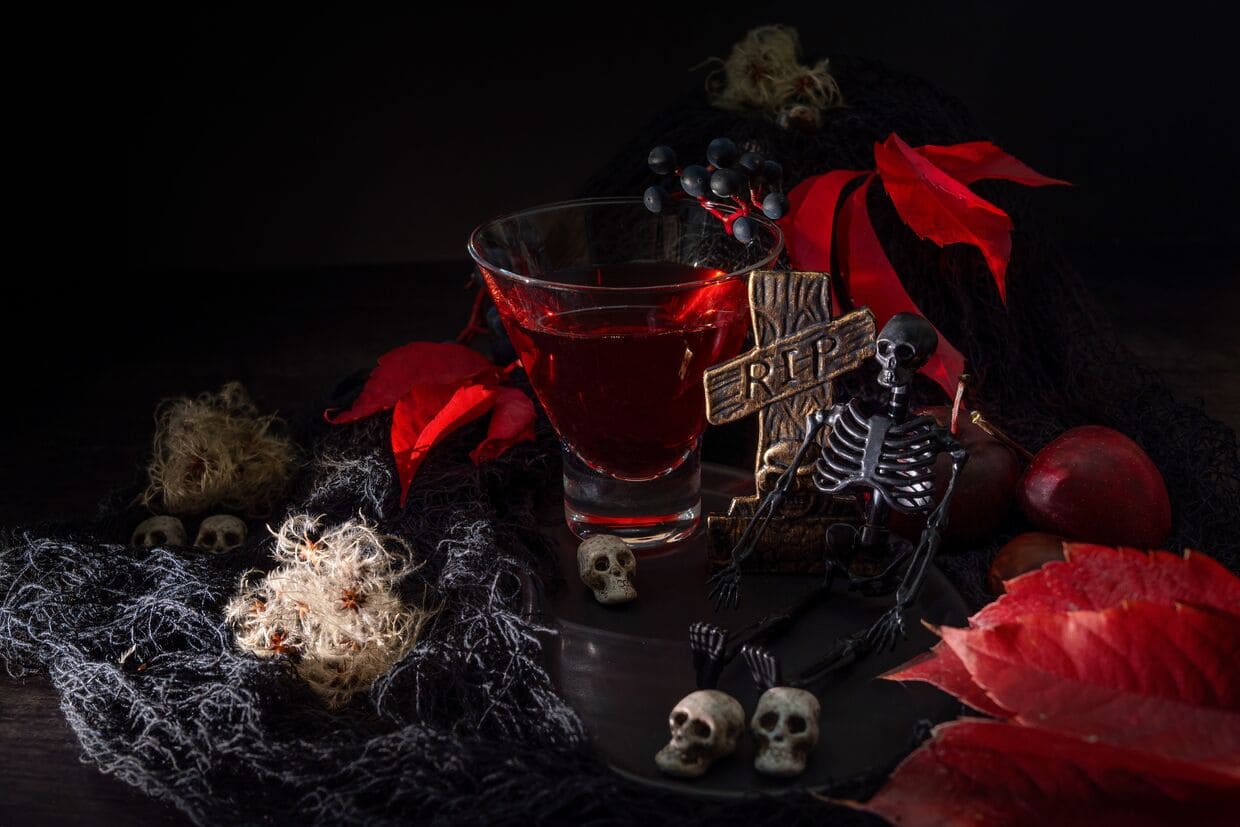
Why menus are moving away from pure sweetness
Forecasters have been tracking a shift away from straightforward sweetness for years. Industry trend reports for 2026 from beverage suppliers and food-technology publications point to growing interest in bitter, sour, savory, and fermented flavors, and bitter ingredients like Campari, Aperol, and Fernet are regularly named in cocktail-trend roundups. Part of the explanation is health-related: people trying to cut back on sugar often find that sour and bitter flavors make up for some of what sweetness provided.
Halloween menus are an obvious place to use this. Dark, deeply colored sauces and tart accents look the part, and they avoid the heavy sweetness that usually defines seasonal food. The shift toward bitter and sour is a general trend rather than a Halloween-specific one, so what follows is best read as a seasonal application of an existing direction in cooking.
The color: why berries and acid turn red
- Anthocyanins
- Water-soluble plant pigments that give blueberries, red cabbage, blackberries, and cherries their red, purple, and blue colors. Their color depends on acidity.
Blueberries get their color from anthocyanins, and the same pH sensitivity that makes butterfly pea tea change color applies here. In strongly acidic conditions, anthocyanins appear red or magenta. At neutral pH they shift toward purple and blue, and in alkaline conditions they turn blue-green and eventually yellowish. That is why blueberries in a very alkaline batter can look green, and why adding lemon juice or another acid pushes them toward pink or red.
| Conditions | Typical color | In the kitchen |
|---|---|---|
| Strongly acidic (about pH 3 and below) | Red to magenta | Berries cooked with vinegar, wine, or citrus |
| Near neutral | Purple to blue | Plain berries, or berries in a neutral batter |
| Alkaline | Blue-green to yellowish | Berries in batters with too much baking soda |
For a "blood-red" sauce, this is the useful part: the acid you add for flavor also pushes the color toward crimson. Anthocyanins can also turn dull gray or slate when they contact reactive metals such as iron or tin, so cooking these sauces in a non-reactive pan helps the color hold.
Anthocyanins are often described as antioxidant-rich, and they do show antioxidant activity in laboratory settings. That is not the same as proof of a health benefit from a spoonful of sauce, so this article treats them as a source of color rather than a health claim.
What acid does on the plate
Sour tastes stimulate saliva, and acid is a standard way for cooks to lift rich, fatty food. Chefs often describe this as cutting through richness or refreshing the palate. "Palate fatigue" is a culinary idea rather than a precisely measured phenomenon, but the practical effect is familiar: a tart element makes a heavy bite taste less heavy and makes the next bite taste fresh.
The type of acid matters. Citric acid comes from lemon, lime, and other citrus. Balsamic vinegar's sourness comes mainly from acetic acid, usually softened by sweetness from the grape must it is made from, so it adds acidity and a rounded, slightly sweet depth at the same time. Red wine adds acidity and tannin, the compounds that create a dry, gripping sensation, which gives a sauce structure beyond simple tartness.
Balsamic-blueberry compote for aged cheese
A compote is the simplest way to apply all of this. The method is straightforward: simmer blueberries with balsamic vinegar and a little sweetener until the berries break down and the liquid turns glossy and syrupy. Season with a pinch of salt and some black pepper. A sprig of thyme is a common addition. Adjust the balance by tasting: more vinegar for sharpness, a little more sweetener if it tastes too sour.
Serve it with a cheese that has its own intensity. Aged, hard, and blue cheeses can handle the acidity, and the compote's tartness offsets their saltiness and richness. A small spoonful beside the cheese works better than a large pool, which would overwhelm it. Balsamic and blue cheese are already combined in classic sauce recipes for game, so the pairing has precedent.
Berry reductions for wild game
Game meats such as venison are lean and strongly flavored, and cooks have long served them with acidic or fruit-based sauces. Red wine reductions, berry sauces, and juniper are standard accompaniments, and published recipes include versions that combine blueberries with red wine and balsamic vinegar.
A basic approach is to reduce red wine, usually with shallots, until concentrated, then add stock, blueberries, and a splash of balsamic, along with juniper berries or herbs such as thyme. Continue reducing until the sauce coats a spoon, strain it if you want a smooth finish, and finish with a little cold butter for gloss. The result is dark, thick, and glossy, close to the color and sheen that gives the dish its blood-like look. The flavor, though, is tart, earthy, and savory rather than sweet.
For a more bitter note, serve the dish with something like radicchio or other bitter greens on the side. Tannin from the wine and berry skins also gives the sauce a slight dryness that reads as grown-up rather than sugary.
The visual idea is theatrical, but the cooking logic holds regardless of the holiday: acid balances richness, tannin and bitter greens add depth, and berry pigments supply the color as long as the sauce stays acidic. The "blood" is a plating effect. What makes the dish worth serving is the balance underneath it.