Butterfly Pea Flower
Published on
Butterfly pea flower turns tea deep blue, then pink with a splash of citrus. Learn the chemistry behind the color shift and its traditional uses.
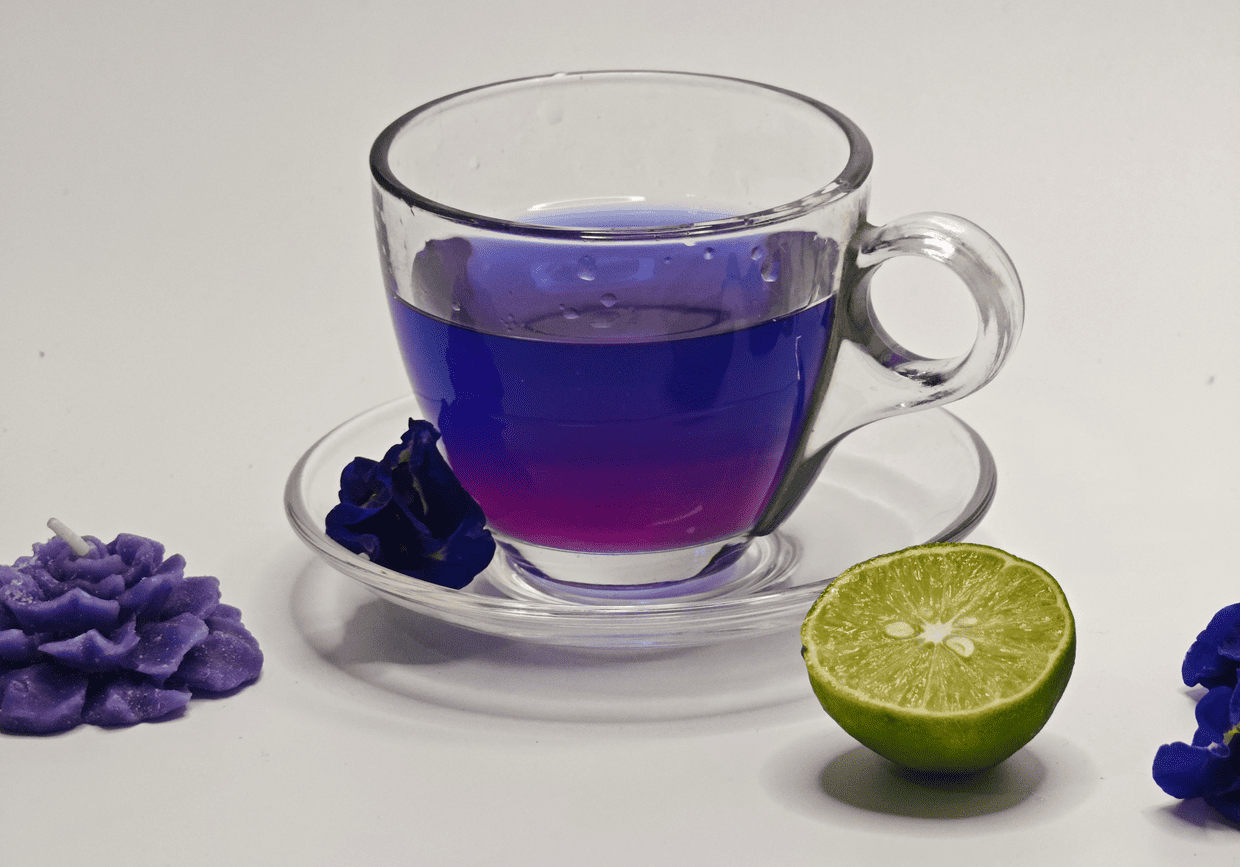
Butterfly Pea Flower: The Tea That Changes Color in Front of You
Butterfly pea flower has become a fixture of Instagram-friendly drinks menus for one obvious reason: steep it in hot water and you get a deep, saturated blue liquid that turns purple or pink the moment you add lemon juice. The visual trick is real chemistry, and the plant behind it has a history that goes back further than the current "blue tea" trend suggests.
What it is
Butterfly pea, or Clitoria ternatea, is a perennial climbing vine in the legume family (Fabaceae), native to tropical and equatorial regions of Asia. It produces vivid deep-blue flowers, and it's those petals — dried or fresh — that are used for tea, dye, and food coloring.
Traditional use
In Ayurvedic medicine, the plant is known as Aparajita, meaning "unconquerable," and has a long history of use as what Ayurvedic tradition classifies as a medhya rasayana — a category of botanicals believed to support memory, reduce stress, and aid cognitive function. That classification reflects traditional use and belief rather than a conclusion from modern clinical research; it's worth treating it as historical context rather than a validated health claim.
Beyond Ayurveda, communities across Thailand, Malaysia, and Indonesia have used the flowers for generations as a natural remedy associated with inflammation, as a dye for textiles, and as a food colorant — most famously in dishes like blue-tinted sticky rice.
What makes it blue — and why it changes color
The flower's color comes from a group of anthocyanins called ternatins. Anthocyanins are a broad class of plant pigments known for being sensitive to pH, and ternatins are a particularly stable, intensely colored subclass of them.
In water at a roughly neutral pH, ternatins hold a molecular structure that reflects as deep blue. Add something acidic — lemon or lime juice is the common example — and the drop in pH changes the molecule's structure, shifting the color toward violet, magenta, or pink. This is a straightforward chemical reaction rather than a special property unique to this plant; other anthocyanin-rich foods (red cabbage is the classic kitchen-science example) shift color the same way, but butterfly pea's ternatins produce an unusually vivid and stable blue, which is why it's become the go-to natural blue pigment in food and drink.
- Anthocyanins
- A broad class of water-soluble plant pigments responsible for red, purple, and blue coloring in many fruits, vegetables, and flowers. Their color shifts with pH, which is the same underlying mechanism seen in foods like red cabbage.
The plant also contains other antioxidant compounds — including kaempferol, p-coumaric acid, and quercetin — that have been studied in laboratory settings for anti-inflammatory activity. As with many plant antioxidant studies, this research is largely preclinical (cell or animal studies), so it demonstrates biological activity in controlled settings rather than proven health benefits in humans at the doses found in a cup of tea.
How it's used today
The most common modern use is as a caffeine-free herbal infusion — hot or iced "blue tea" — either from whole dried flowers or a powdered extract. The powder also gets folded into smoothies and baked goods for both color and a mild antioxidant boost, and it's a popular ingredient in craft cocktails and mocktails specifically for the color-change effect when an acidic mixer is added.
People who drink it commonly report mild relaxation and use it as a general antioxidant supplement, though — as with most herbal teas marketed for wellness — these are self-reported effects rather than claims backed by robust human clinical trials.
There's also a growing cosmetic application: extract is being incorporated into skincare and haircare formulations, with some small studies suggesting possible benefits for skin hydration and scalp irritation. The research base here is still limited, and claims about specific cosmetic benefits should be read as preliminary rather than established.
Legal status and safety
Butterfly pea flower is legal to grow, buy, and consume, and it doesn't carry the regulatory ambiguity that surrounds some other botanical products. In the United States, the FDA approved butterfly pea flower extract as a color additive exempt from certification, clearing it for use as a natural blue coloring in commercial food and beverage products — a notable milestone, since naturally derived blue food colorants are relatively rare.
It's generally considered safe for consumption in typical amounts. Reported side effects are uncommon and mild — some people note stomach upset, and it may have a mild diuretic effect if consumed in large quantities. Safety data specifically for pregnant or nursing women is limited, so checking with a healthcare provider before regular use in those situations is a reasonable precaution rather than a sign of any known specific risk.
Butterfly pea flower earns its current popularity honestly: it's a legitimate, well-tolerated botanical with a long traditional-use history, and its signature color shift is a genuine, well-understood chemical property rather than a marketing gimmick. Where the evidence gets thinner is on the specific wellness and cognitive claims attached to it — those trace back to traditional classification and preliminary lab research rather than confirmed clinical benefit, which is worth keeping in mind if the appeal is more than aesthetic.