Cooking With Primal Fire: Why Embers, Hot Stones, and Binchotan Are Back
Published on
Chefs and home cooks are moving away from gadget-heavy kitchens and cooking directly over embers, wood, hot stones, and specialty charcoal like binchotan. This guide explains what each heat source does, what binchotan actually is, and the health trade-offs of cooking over open fire.
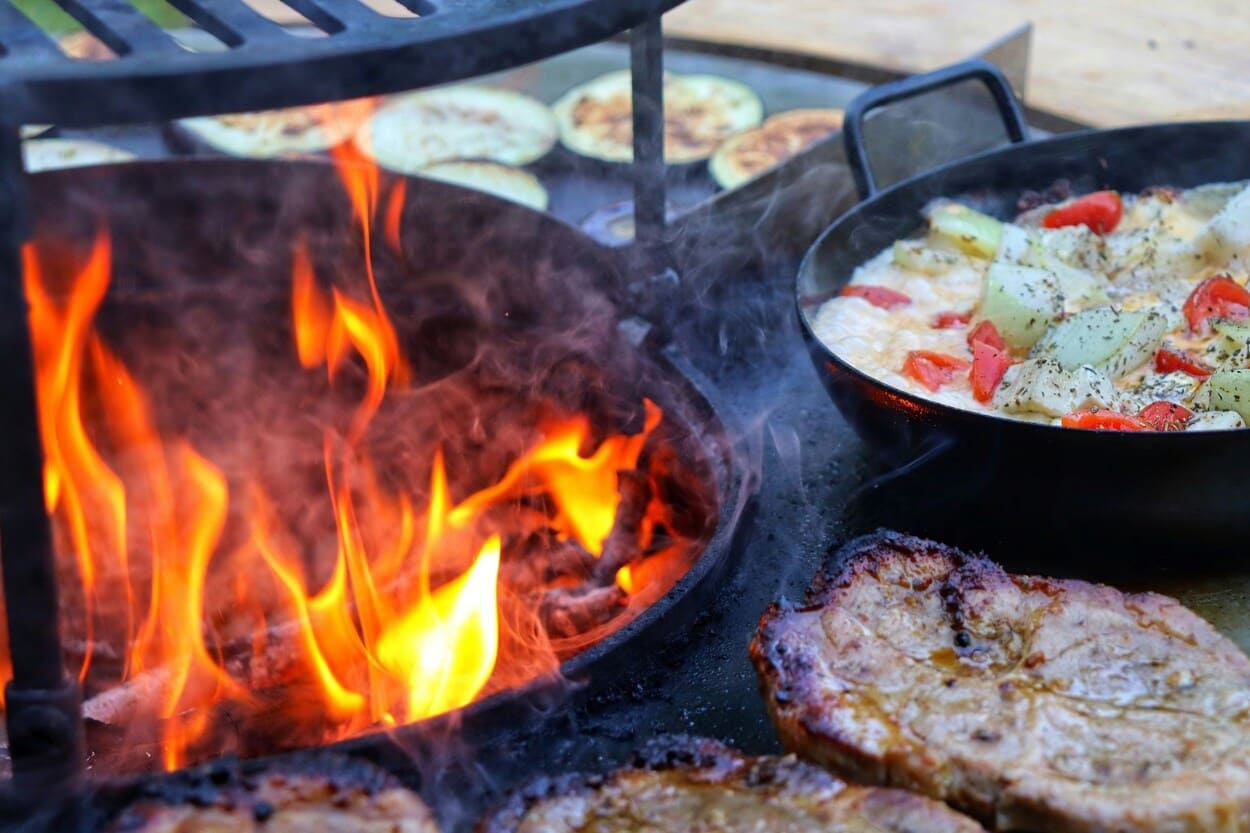
Fire as an ingredient, not just a heat source
Cooking over fire is the oldest technique there is, so the "resurgence" is really a change in where fire sits in the modern kitchen. In 2026, the MICHELIN Guide's inspectors listed cooking over embers, wood, hot stones, and binchotan among the trends they were seeing around the world. Other coverage describes the same pattern in Nordic restaurants built around wood-fired hearths and in American dining rooms where the grill is placed in full view of the guests.
The flavor argument is simple. High, direct heat browns and chars the surface of food, and smoke from burning wood adds aroma on top of that. Chefs often describe the result as layered: sweetness from caramelization, bitterness from char, and a background of smoke, all in proportions that are hard to reproduce with a gas burner or an oven.
The second argument is theater. A hearth is difficult to hide, so the cooking becomes part of the meal. One chef quoted in restaurant coverage compared it to the way almost everyone already has some connection to fire, through camping, backyard cookouts, or a fireplace.
Embers, flames, stones, and binchotan compared
"Live fire" covers several different heat sources, and cooks tend to choose between them deliberately. The table below is a general guide, not a set of rules; real results depend on the fuel, the airflow, and the food.
| Heat source | Character | Often used for | Main trade-off |
|---|---|---|---|
| Wood embers | Strong radiant heat, aromatic, adjustable by moving coals | Vegetables, fish, shellfish, whole cuts | Needs time and skill to build and manage a bed of coals |
| Open wood flame | Intense and variable, with the most smoke | Heavy char, large cuts, rustic presentation | Flare-ups make over-charring easy |
| Hot stones | Stored heat that radiates steadily | Cooking on a hot surface or with stone contact | Slow to heat, and the stone has to be suitable for the job |
| Binchotan | Steady, high heat with little flame and smoke | Skewers and delicate ingredients | Expensive, and adds little smoke flavor of its own |
Cooking over embers rather than flames is a recurring theme. Coverage of ember-focused restaurants mentions dishes such as beets buried directly in the coals, peppers charred right in the fire, and oysters cooked in embers. Burying or nestling food in coals shows how far the technique can go beyond a grill grate.
What binchotan is
- Binchotan
- A hard, dense Japanese white charcoal, traditionally made in the Kishu region of Wakayama from oak, and long associated with yakitori and other grilling.
Binchotan has a long history in Japan, with accounts tracing its production in the Kishu region to the Edo period. Producers carbonize oak slowly, then raise the kiln temperature sharply at the end to drive off impurities. The result is very dense charcoal with a high carbon content that burns for hours with little visible flame or smoke. That steadiness is why yakitori cooks favor it for skewers, where even, controllable heat matters more than smoky flavor.
Two cautions apply when reading about it. First, grade matters: sellers note that lower-quality white charcoal is made in several other countries and is sometimes mixed with Japanese product, and that some cheap imitations contain additives. Second, many sellers claim that binchotan emits far-infrared radiation that cooks food faster and keeps it juicier. That claim comes largely from retailers rather than independent testing, so it is better treated as a marketing claim than an established fact. The more modest and better-supported point is that dense charcoal burns cleanly, steadily, and for a long time.
The cost of cooking with fire
For restaurants, live fire is expensive and slow. Quality wood costs money, hearths need regular maintenance, and solid-fuel kitchens can face extra permitting and inspection. Cooking over fire is also technically demanding, since the cook is managing heat, smoke, and timing without a dial.
There is also a health consideration. The U.S. National Cancer Institute explains that cooking muscle meat at high temperatures, including grilling directly over an open flame, forms heterocyclic amines (HCAs), and that smoke from dripping fat deposits polycyclic aromatic hydrocarbons (PAHs) on the surface of the meat. Both groups of chemicals have been shown to be mutagenic in laboratory studies. The evidence in people is largely observational, and researchers have said it is not clear how much grilled meat it would take to meaningfully raise risk, so there is no established safe threshold to quote. Fruits and vegetables do not form HCAs, which is one reason ember-cooked vegetables are not subject to the same concern as heavily charred meat.
Common advice for reducing exposure is to avoid prolonged cooking at very high heat, to keep meat from flaring up in direct flame, to turn it often, and to trim away charred portions. The tension is obvious: char is part of the appeal. The practical middle ground is browning and light char rather than blackening.
Live-fire cooking is not new, and it does not make food automatically better. What the current revival offers is control over a few specific variables: how hot the fire is, how close the food sits, and how much smoke reaches it. Cooks who learn to manage those variables get flavors that a gadget-heavy kitchen rarely produces, and diners get to watch it happen.